Nitriding vs carburizing: these are two heat treatment processes that harden the surface layer of steel, but they do it in different ways. Nitriding is a process of saturating the steel surface with nitrogen at a low temperature, while carburizing saturates the surface layer with carbon at a high temperature. Below we explain what the nitriding and carburizing process involves, what the applications of both methods are and how to choose the right one for a given part.
Table of contents:
- What is nitriding?
- Plasma nitriding – how does the process work?
- What is nitrided steel?
- What is carburizing?
- Gas carburizing – what are its characteristics?
- Nitriding vs carburizing – differences
- Applications of nitriding and carburizing
- Hardening vs the nitriding and carburizing process
- How much does steel nitriding cost?
- How to choose the process for your part?
- Nitriding vs carburizing – FAQ
What is nitriding?
Nitriding involves introducing nitrogen atoms into the surface layer of steel by diffusion. It is a thermochemical treatment in which the part is heated in a nitrogen-rich environment. The source of nitrogen is most often ammonia, and ammonia dissociates at high temperature. The released nitrogen penetrates deep into the material, and thanks to nitrogen diffusion a thin, very hard layer of nitrides forms. The core of the part remains unchanged.
The goal of nitriding is a hard layer resistant to abrasive wear. The nitriding temperature is usually 450–550 °C, so steel nitriding is carried out at a lower temperature than carburizing. The nitriding time is long, from several to several dozen hours, but the nitriding process causes little distortion. After nitriding is finished the part does not require hardening, which reduces the risk of deformation and helps keep the dimensions.
Plasma nitriding – how does the process work?
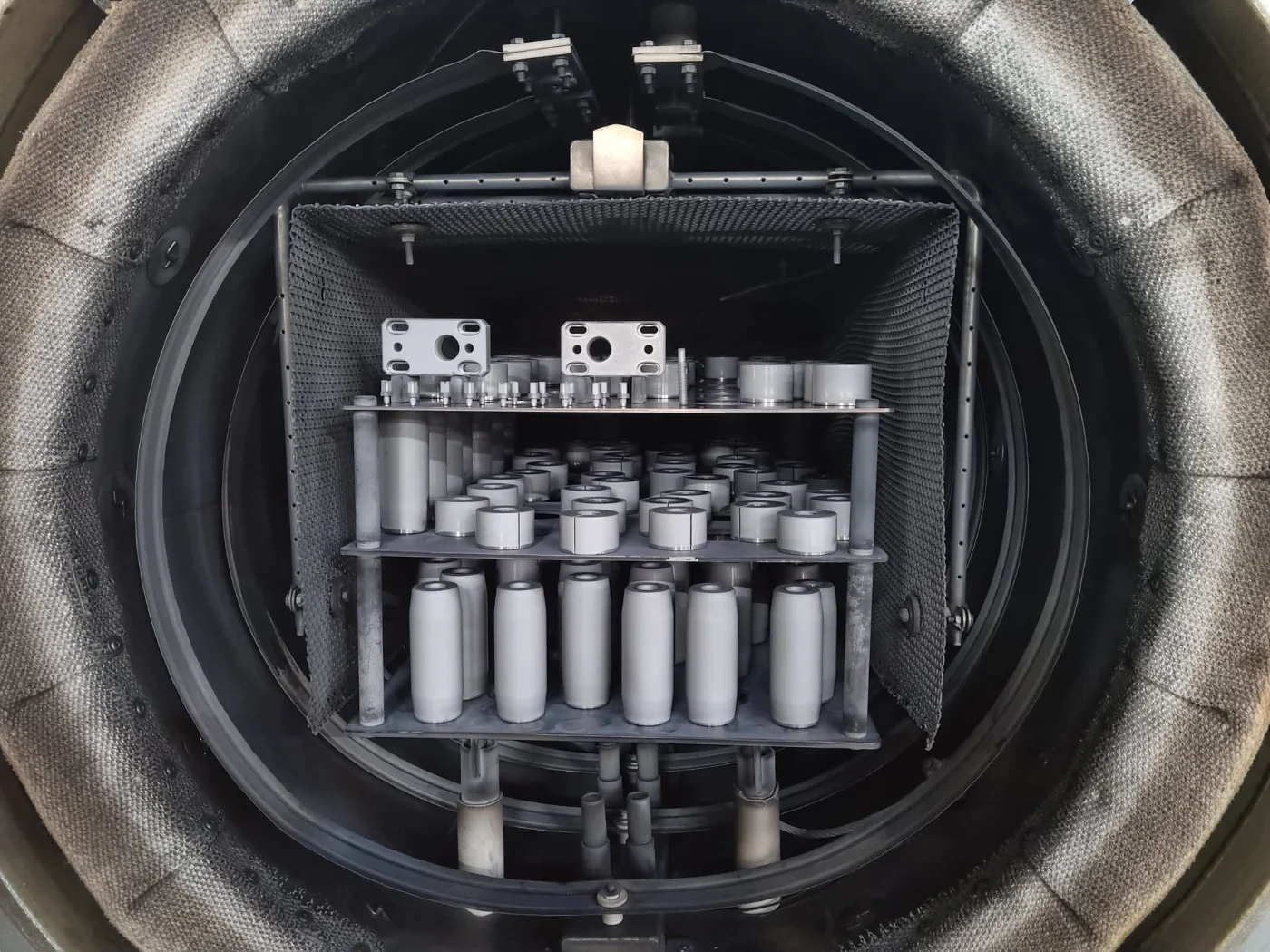
Plasma nitriding, also called ion nitriding, uses a process gas ionised in a vacuum chamber. The nitriding cycle begins by placing the product in the chamber. After the right conditions are reached the chamber is filled with gas and preliminary heating begins. The nitriding temperature in a standard cycle is in the range of 450–550 °C.
After a set time the gas is ionised and impurities are removed from the surface of the material. After the surface is cleaned, the actual nitriding cycle starts. Plasma nitriding works well for parts with tight tolerances, and gas nitriding is also used alongside it, in which the source of nitrogen is ammonia.
What is nitrided steel?
Nitrided steel is steel whose surface layer has been saturated with nitrogen in the nitriding process. It gets a surface of high hardness, usually 900–1200 HV, while keeping a tough core. Such a material has high abrasion resistance, and its fatigue strength increases. The high surface hardness does not drop even at elevated working temperatures, so steel after nitriding performs well in demanding conditions.
In lighter conditions nitriding can also increase corrosion resistance. Alloy steels are more often subjected to nitriding, because their alloying elements form hard nitrides that determine the mechanical properties of the layer. The properties depend on the steel grade, so the choice of material for nitriding should be discussed before production starts.
What is carburizing?
Carburizing is a heat treatment process in which the surface layer of steel is saturated with carbon. It involves introducing carbon atoms into the material by diffusion. Steel carburizing is used mainly for low-carbon steels, because they have a soft core, and once the surface is enriched with carbon it can be hardened.
The goal of carburizing is to create an abrasion-resistant surface layer while keeping the core's resistance to impact. The carburizing temperature is higher than in nitriding and is usually 850–950 °C. A longer carburizing time and a higher temperature increase the carbon diffusion depth, so carburizing gives deeper hardened layers than nitriding. After carburizing is finished the steel requires hardening, followed by tempering.
Gas carburizing – what are its characteristics?
Gas carburizing takes place in an atmosphere containing carbon, for example carbon monoxide or methane. The part is heated to a high temperature, and carbon diffuses into the surface layer. The gas carburizing temperature is about 880–950 °C, and the process time is chosen to match the required layer depth.
Besides gas carburizing, plasma and vacuum carburizing are used. The goal of each of these methods is the same: a hard layer and a tough core. Only hardening after carburizing gives the carbon-saturated layer its high hardness.
Nitriding vs carburizing – differences
Nitriding vs carburizing differ in the element that saturates the material: in nitriding it is nitrogen, and in carburizing it is carbon. They also differ in temperature, layer depth and the need for hardening. Below is a comparison of the most important parameters of nitriding and carburizing.
Nitriding and carburizing temperature
Nitriding takes place at 450–550 °C, and carburizing at about 850–900 °C, and in gas carburizing up to 950 °C. The lower nitriding temperature means less distortion and a lower risk of dimensional change. Unlike carburizing, the nitriding process does not require hardening afterwards.
Layer depth and hardness
Nitriding gives thinner layers than carburizing, but with greater hardness. The hardness of steel after nitriding is 900–1200 HV, and after carburizing about 700 HV. Carburizing gives deeper layers, so it works better where the part carries heavy loads.
Corrosion resistance
Nitriding improves corrosion and abrasion resistance, while carburizing gives no such improvement. If the part works in a corrosive environment, take this into account when choosing nitriding or carburizing.
Material
Nitriding more often requires alloy steels, and carburizing low-carbon steel. The choice is decided by the steel grade, its composition and the required mechanical properties.
Applications of nitriding and carburizing
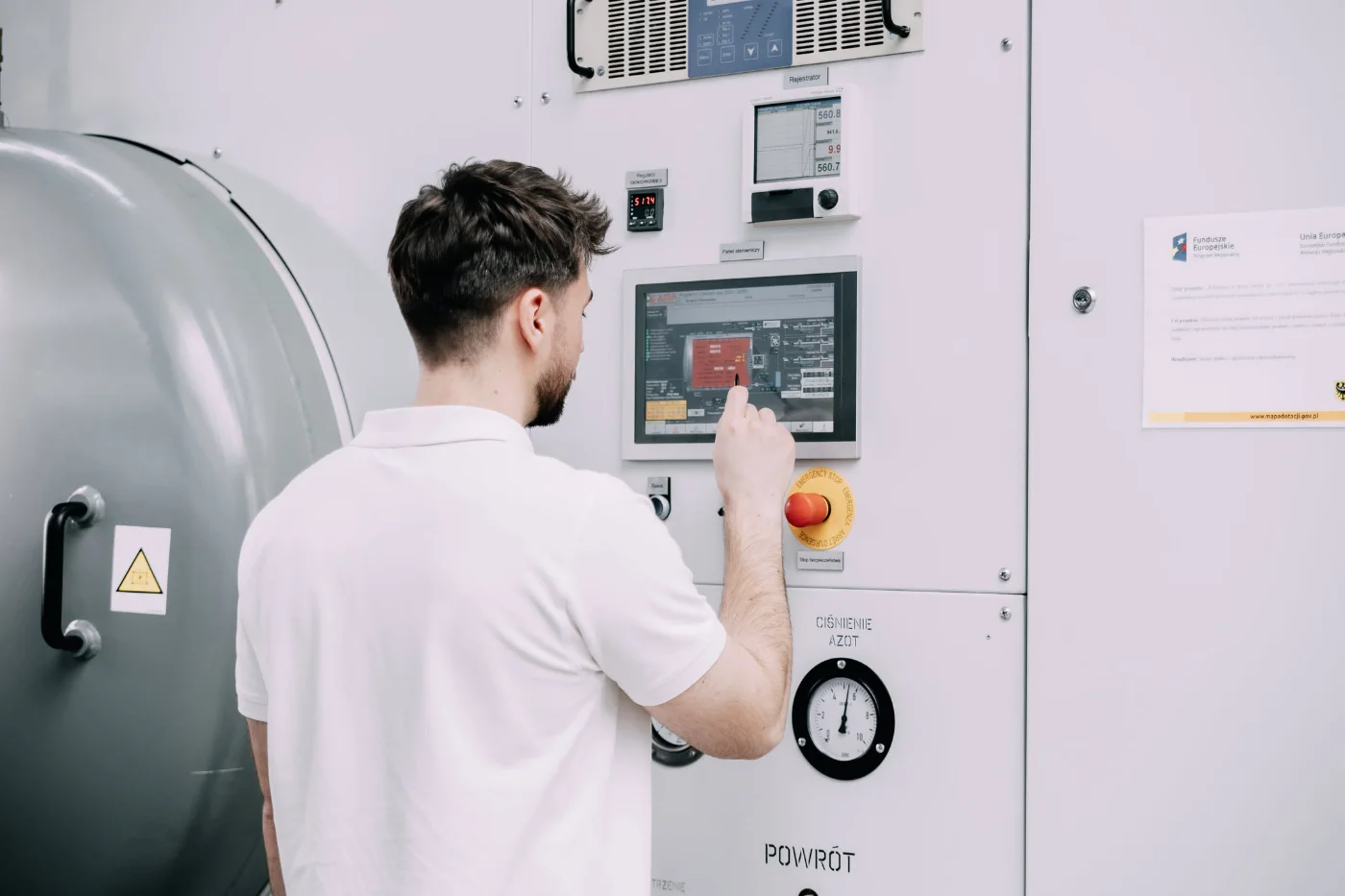
Both processes are used in the production of parts that must be wear-resistant and strong. Below are examples of applications of nitriding and carburizing.
Application of nitriding
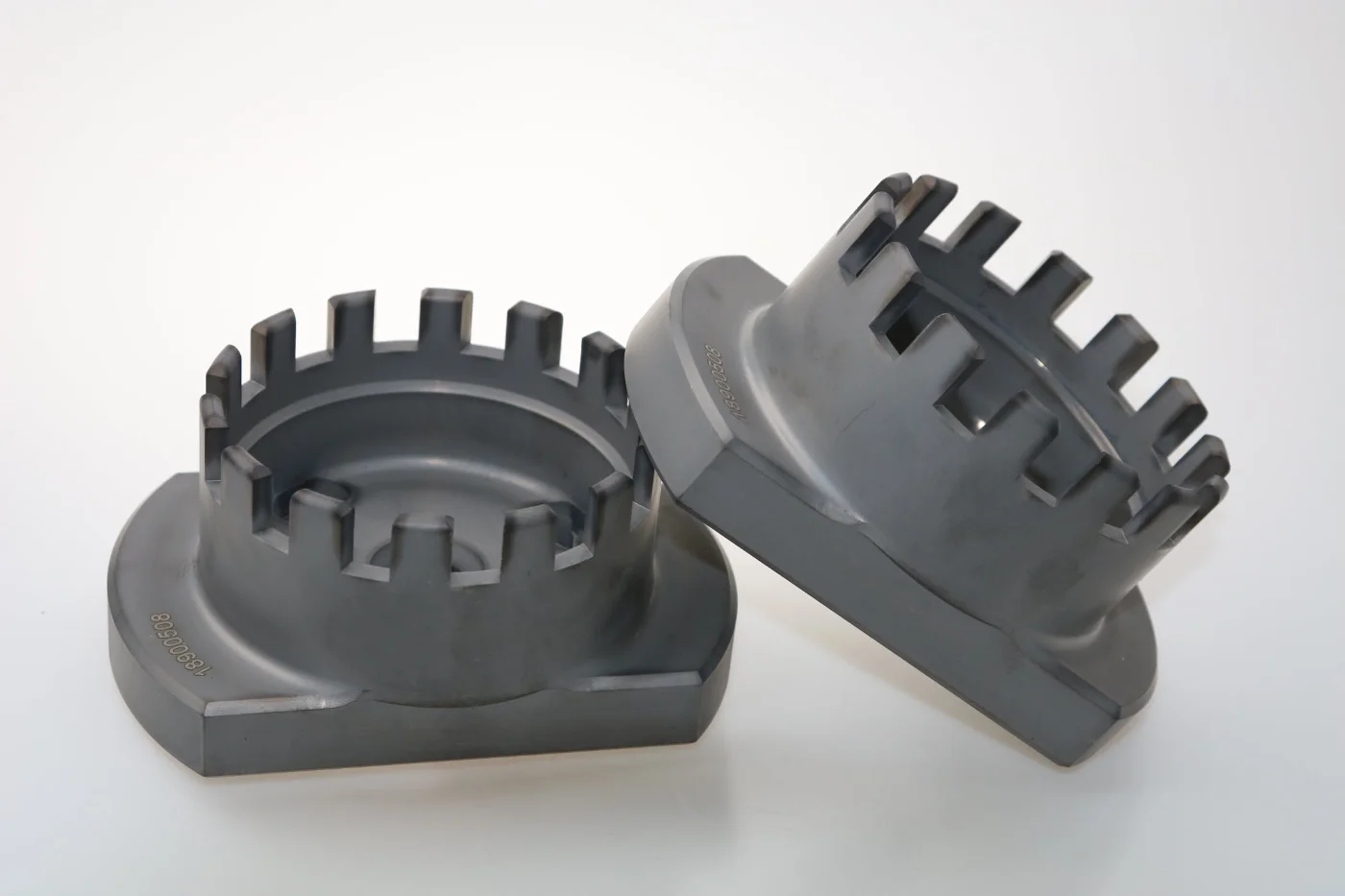
Nitriding is used where precise dimensions are required, because after the process the part does not need hardening. Applications of nitriding include cold-forming tools, the production of cutting tools, and engine and pump parts. Gears, crankshafts and pins are also nitrided. Nitriding improves abrasion and corrosion resistance, so it works well where surface durability matters.
Application of carburizing
Carburizing is used for parts working under heavy loads. Gears in transmissions, pins, crankshafts and other parts with a hard surface and a tough core resistant to impact are carburized. Applications of carburizing cover low-carbon steel, which after treatment gets a surface layer of high hardness.
Mechanical properties after treatment
Both processes improve the set of mechanical properties of parts and extend their durability. They change the properties of the steel surface, not of the whole cross-section, so what matters is increasing hardness only where it is needed. The part gets a layer of high hardness and surface resistance to abrasive wear, while the core limits cracking under impact. This applies to nitriding and carburizing of gears, pins and shafts. The process parameters, namely temperature, soaking time and the surrounding atmosphere, determine the structure of the layer. It is a thermochemical process that takes a long time and requires control so that the layer is even. In carburizing of steel, high strength comes from tempering after hardening, and the depth of hardening depends on the elements present in the steel.
Hardening vs the nitriding and carburizing process
Hardening is the basic process for strengthening steel, but it works differently from nitriding and carburizing. Hardening changes the structure of the material, while nitriding and carburizing change the chemical composition of the surface layer through diffusion of elements. Carburizing requires hardening afterwards, and nitriding does not. You can read more about hardening on this page: Heat treatment.
Heat treatment also affects further machining. A hard surface makes work harder for cutting tools, so turning and milling are usually done before nitriding or carburizing, and grinding after it. You can find details about grinding on this page: CNC grinding.
How much does steel nitriding cost?
The cost of nitriding depends on the size and number of parts, the steel grade, the required layer depth and the nitriding time. The method also matters, for example plasma or gas nitriding. Every part has a different geometry and different requirements, so we do not give one price for all orders. We prepare quotes individually, based on the drawing, the material and the batch size.
How to choose the process for your part?
The choice between nitriding and carburizing depends on the part geometry, the steel grade and the working conditions. If precise dimensions and low distortion matter, nitriding will be better. If the part is to carry heavy loads and needs a deeper layer, carburizing is chosen more often.
It is worth paying attention to a few things:
- steel grade – nitriding usually requires alloy steels, and carburizing low-carbon ones,
- layer depth – a deeper one more often means carburizing, a thinner and harder one means nitriding,
- tolerances – the lower nitriding temperature helps keep the dimensions,
- working conditions – loads, abrasion and environment decide the choice of nitriding or carburizing.
After heat treatment it is worth checking finished parts by measurement, which we describe on this page: CNC quality control.
Nitriding vs carburizing – FAQ
What is nitriding?
In nitriding, nitrogen atoms are introduced by diffusion into the surface layer of steel at a temperature of about 450–550 °C. A thin, hard layer resistant to wear forms, and the part does not need hardening after the process.
What is carburizing?
Carburizing is saturating the steel surface with carbon at a high temperature, usually 850–950 °C. It is used mainly for low-carbon steels, and after carburizing the part must be hardened.
What is nitrided steel?
Nitrided steel is steel with a surface layer saturated with nitrogen. It has high surface hardness, in the range of 900–1200 HV, a tough core and high abrasion resistance, and in lighter conditions also higher corrosion resistance.
How much does steel nitriding cost?
The price depends on the size and number of parts, the steel grade, the layer depth and the nitriding method, so the quote is prepared individually based on the drawing and the batch size.