CNC milling is a machining process in which a rotating tool removes excess material from a clamped workpiece under computer control, producing planes, pockets, grooves and complex shapes. It is better than turning for flat walls and complex geometry, while turning is usually enough for round parts. Below we explain how the process works, what types of milling and machines there are, what the cost depends on and how to prepare an enquiry.
Table of contents
- What CNC milling is
- How the CNC milling process works, step by step
- Types of milling
- CNC milling machines and machining axes
- Machining parameters and factors affecting quality
- Which materials can be milled
- Applications of CNC milling
- The cost of CNC milling
- CNC milling services at Sacher
- CNC milling - FAQ
What CNC milling is
In CNC milling, the workpiece is held in a chuck or vise, and the cutting tool, the milling cutter, rotates. The cutter's edges remove successive layers of material as chips, while the table with the workpiece or the spindle head moves along the programmed axes. This is how planes, grooves, pockets, holes and three-dimensional shapes are created.
CNC stands for computer numerical control. With computer control, the machine reads a program that defines the spindle speed, feed, depth of cut and the tool path. CNC machine tools have replaced manual guidance of the tool, so the result does not depend on the operator's hand and successive parts are made identically.
Compared with traditional milling on a manually controlled machine, CNC technology offers high precision, repeatability and the ability to make complex shapes in a single setup. That is why milling is today one of the key machining technologies in many branches of industry.
How the CNC milling process works, step by step
The CNC milling process consists of several key stages:
- Documentation and program. Based on a technical drawing or a 3D model, the technologist prepares a program that defines the sequence of operations, the tools and the machining parameters.
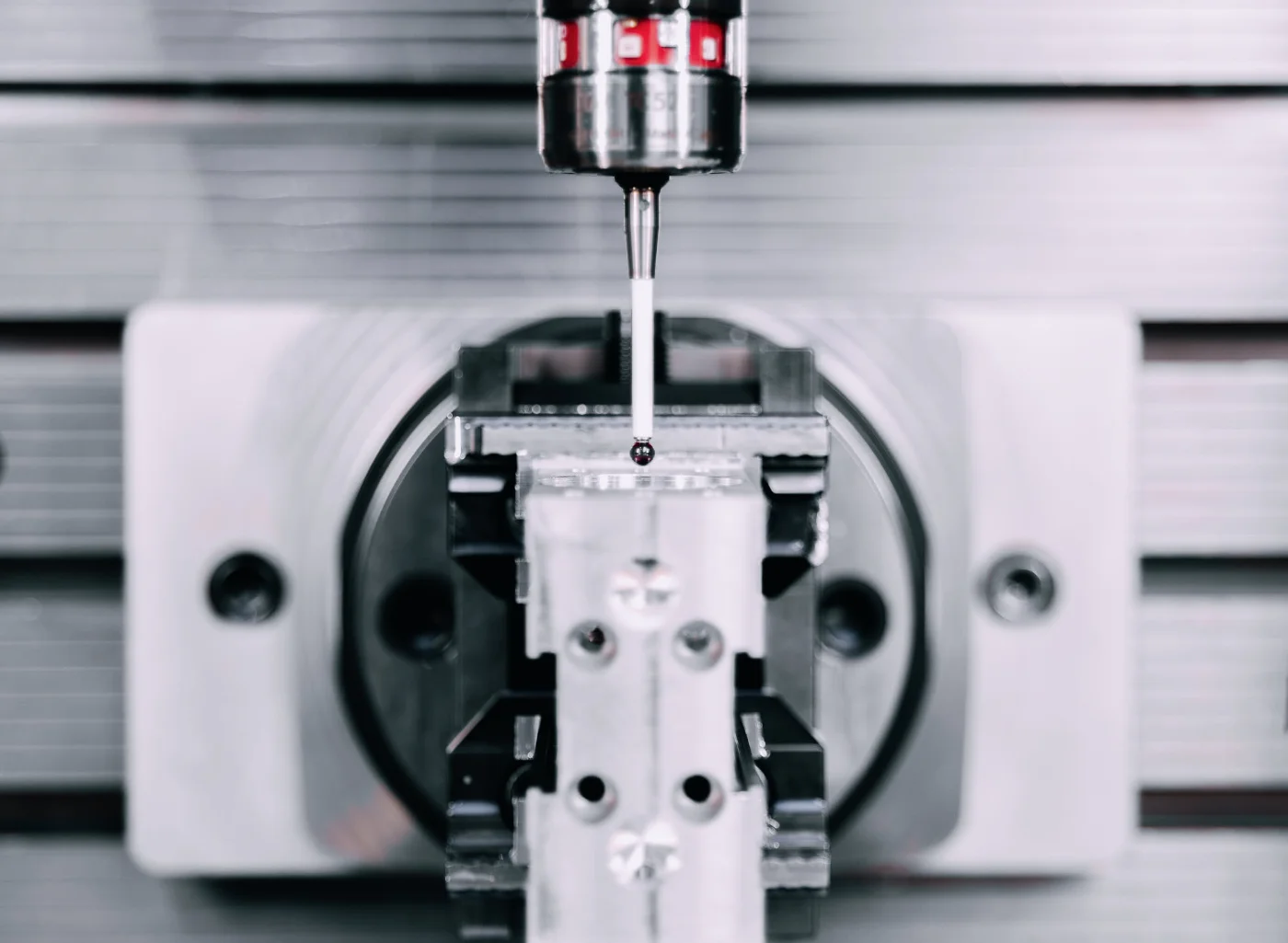
- Machine setup. The operator loads the tools into the magazine, measures their lengths and sets the workpiece zero point on the X, Y and Z axes.
- Clamping the material. The workpiece is held in a vise or a dedicated fixture so that it does not move under cutting forces.
- Roughing. A large cutter with a large depth of cut quickly removes most of the excess material.
- Finishing. A smaller tool and gentler parameters give better surface quality and the required tolerances. Tool changes take place automatically.
- Additional operations. In the same setup, drilling, threading and boring of holes can be performed.
- Inspection. Key dimensions are measured with measuring instruments or on a measuring machine and compared with the drawing.
When changing batches, it is enough to load a new program and change the tools, so CNC technology allows both single prototypes and larger series to be produced.
Types of milling
The type of milling is determined by which part of the cutter is working and which surface is being machined. In practice, the most common are:
| Type | What it involves | Typical example |
|---|---|---|
| Face milling | The cutter works with its face, the tool axis is perpendicular to the surface | Machining flat surfaces, facing plates |
| Peripheral milling | The cutter works with its circumference, the tool axis is parallel to the surface | Grooves, steps, side walls |
| Profile milling | A cutter with a suitable profile reproduces its shape on the workpiece | Profiles, radii, chamfers, moulds |
| Climb milling | The cutter rotates in the same direction as the feed | Finishing, better surface quality, less tool wear |
| Conventional (up) milling | The cutter rotates against the direction of the feed | Roughing, materials with a hard scale |
The difference between climb and conventional milling affects surface quality and tool life. Climb milling usually gives a better surface and less cutter wear, but it requires a rigid machine without backlash. Conventional milling is safer on older machines and on the first pass through a hard layer of material. On modern CNC machine tools, climb milling is used most often.
CNC milling machines and machining axes
The choice of machine depends on the size of the part, its geometry and the batch size. Three solutions are the most common:
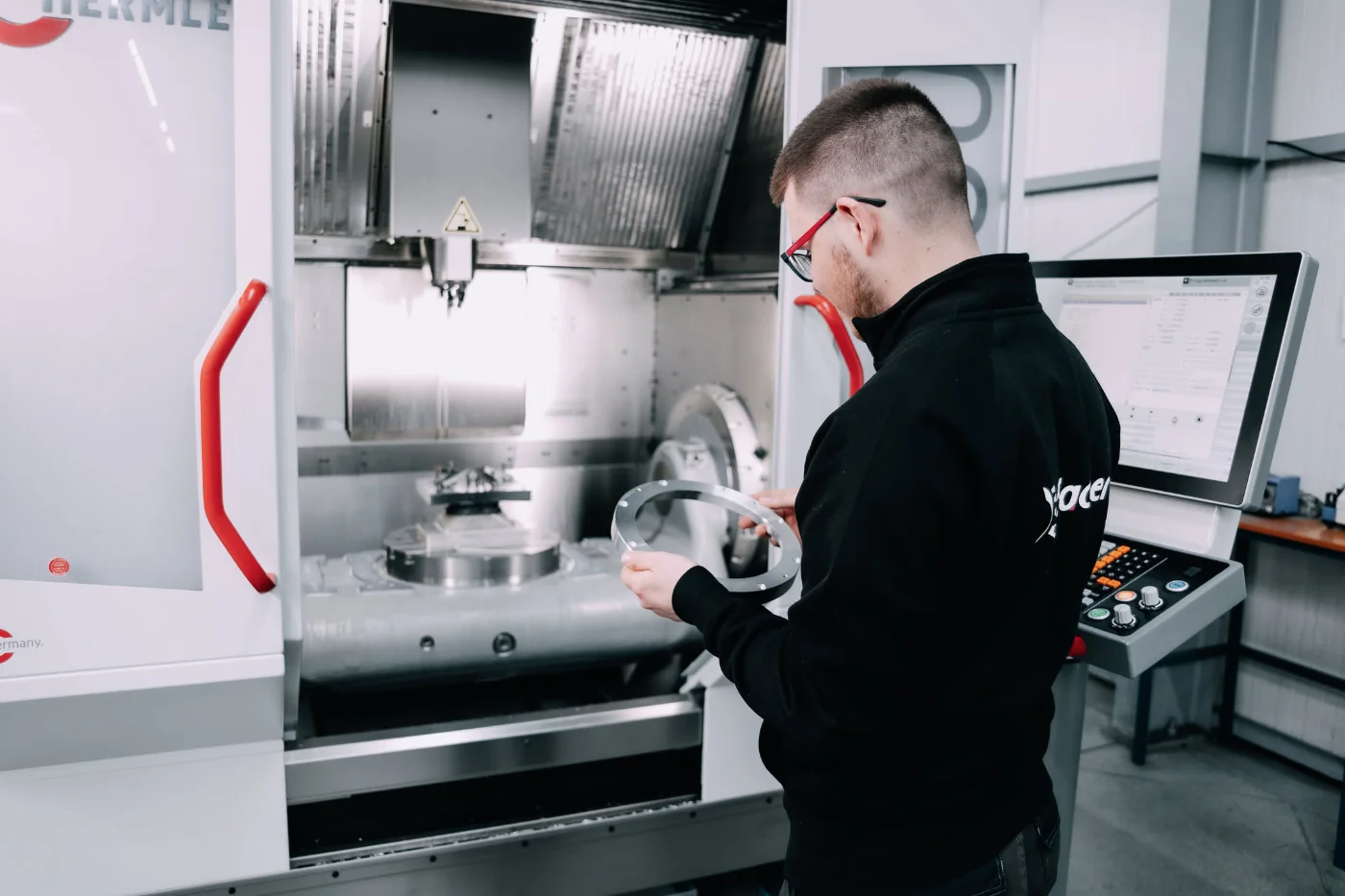
- 3-axis milling machines. The tool moves along the X, Y and Z axes. These are standard CNC machine tools for plates, bodies, housings and parts with simpler geometry.
- 4-axis machines. An additional rotary axis makes it possible to machine the workpiece from several sides in one setup.
- 5-axis machines. Two rotary axes make it possible to machine complex three-dimensional surfaces and produce complicated shapes without repeated re-clamping. We write more about when this pays off in our article on 5-axis machining.
The X and Y axes define movement in the plane of the table, and the Z axis is responsible for the depth of cut. The more axes, the fewer setups, the lower the risk of setup errors and the better the concentricity of the machined surfaces.
Machining parameters and factors affecting quality
Three basic parameters determine the result of milling: the spindle speed of the cutter, the feed and the depth of cut. Choosing them correctly affects machining time, tool life and surface quality.
| Parameter | What happens when it is increased | What to watch out for |
|---|---|---|
| Spindle speed | Shorter machining time, better surface quality when chosen correctly | Edge overheating and faster tool wear |
| Feed | Shorter machining time | Higher roughness and higher cutting forces |
| Depth of cut | More material removed in one pass | Vibration, cutter deflection and risk of dimensional error |
The selected machining parameters also depend on other factors:
- Type of material. Aluminium can be machined at high speeds, while stainless steel requires lower speeds and sharp tools.
- Cutting tool. The cutter diameter, the number of flutes, the coating and the edge geometry all matter.
- Rigidity of clamping and of the machine. Loose clamping or a long tool overhang causes vibration and worsens dimensions.
- Cooling. Coolant carries away heat and chips, which extends tool life.
- Required surface quality and tolerances. The more accurate the part, the more finishing passes and the longer the machining time.
Optimising the parameters means finding a compromise between machining time, tool wear and surface quality. A well-chosen program also helps reduce tool wear and shorten lead time during milling.
Which materials can be milled
CNC milling machines process a wide range of materials: metals and plastics. The type of material affects the choice of tools, parameters and cooling, and therefore the machining cost.
| Material | Characteristics when milling | Typical parts |
|---|---|---|
| Aluminium | Light and easy to machine, allows high speeds and short machining time. Milling aluminium requires sharp tools and good chip evacuation | Housings, plates, lightweight structural parts |
| Structural and alloy steel | Good machinability, possibility of later heat treatment | Bodies, gears, machine parts |
| Stainless steel | Corrosion resistant, but harder to machine because it conducts heat poorly and work-hardens during cutting | Parts for the food, medical and chemical industries |
| Plastics | Low cutting forces, but risk of deformation due to heat | Guides, housings, insulating parts |
With stainless steel and plastics, knowledge of the machined material is especially important. The same drawing made from a different material may require different tools, parameters and machining time.
Applications of CNC milling
CNC milling is widely used in many fields of industry. Examples of applications include:
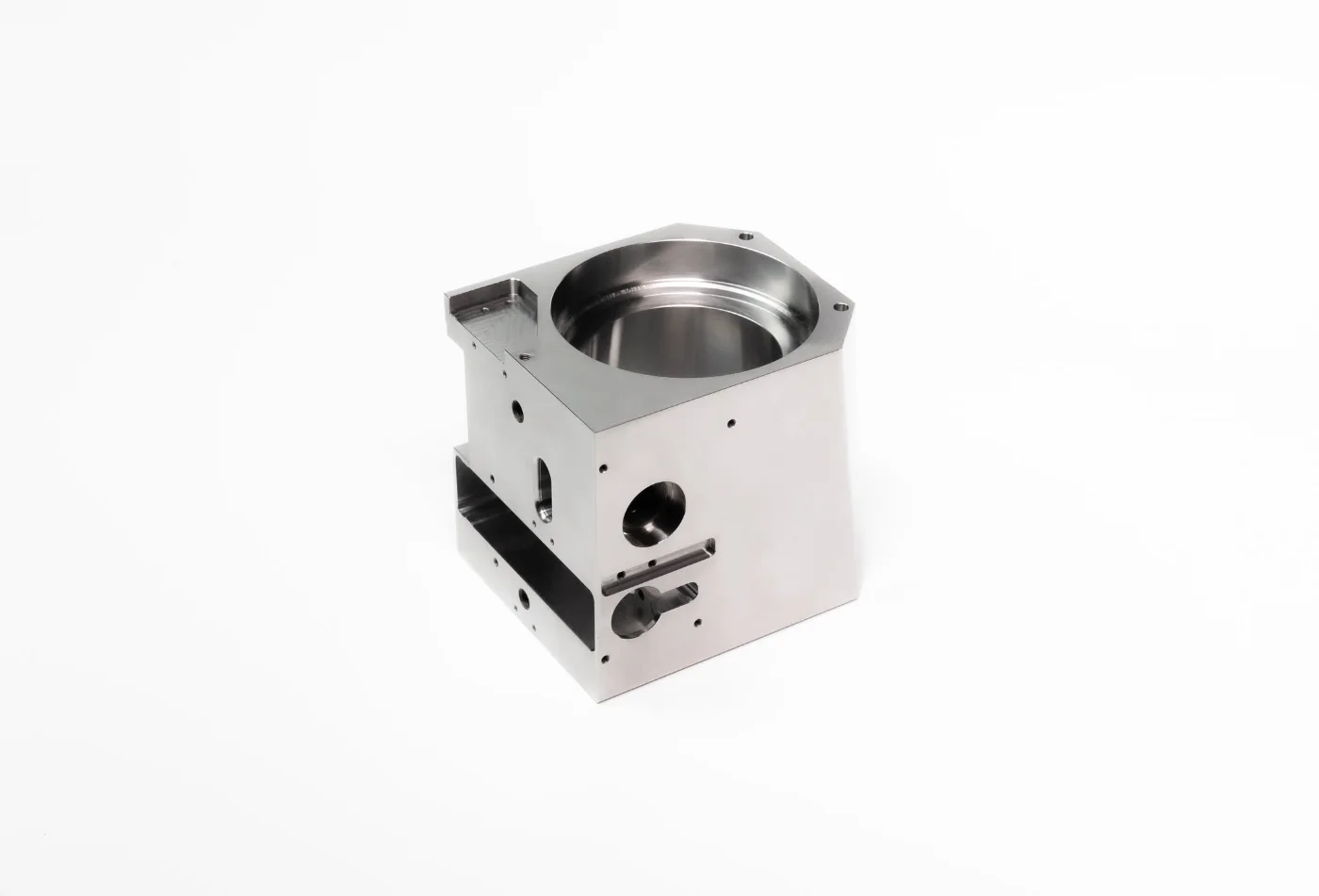
- Aerospace industry: structural parts, housings and brackets made of aluminium and steel, produced with high accuracy and documented quality control.
- Automotive industry: housings, casings, drivetrain parts, prototypes and tooling.
- Medical industry: components of medical tools and devices, often made of stainless steel.
- Machine building and automation: plates, bodies, guides and parts of mechanical assemblies.
- Toolmaking and moulds: precision shaping of punching dies, injection moulds and electrodes.
The technology allows both single prototypes and series production. As a result, CNC milling is of key importance in different industries where repeatability and high precision matter.
The cost of CNC milling
The cost of CNC milling is not just the price of an hour of machine time. The price of a part is influenced above all by:
- Geometric complexity. The more operations, setups and features requiring 4- or 5-axis machining, the longer the machine time.
- Type of material. Stainless steel and difficult-to-machine alloys wear tools faster than aluminium or plastics.
- Tolerances and surface quality. Tighter requirements mean more finishing passes and more measurement inspection.
- Batch size. The program and machine setup are done once, so with a larger quantity the cost of a single part falls.
- Additional operations. Heat treatment, grinding or quality control add stages, but they deliver the required properties of the part.
In one-off production, the largest part of the cost is usually preparation: programming, clamping and tool setup. In series production, these costs are spread over many parts, and what counts is optimising cycle time and tool wear. When comparing quotes, remember that competitive prices do not always mean the lowest cost of the whole project, because lead time, repeatability and quality control matter too.
CNC milling services at Sacher
Sacher has been developing its competence in producing precision parts since 1989. Our machine park consists of 28 machining centres, and the team has 52 specialists. As a result, we can offer CNC milling services for metals and plastics, from prototypes and single parts to small and medium batches. For milling we also have 5-axis machines, which allow complex projects with complicated shapes to be carried out in a single setup.
We also offer additional services in one place: turning, grinding, EDM, our own heat treatment and quality control. This shortens the lead time, because the part does not have to travel between several plants, and one contractor is responsible for the result.
To prepare a quote, please send us:
- a technical drawing or 3D model,
- the material grade,
- the quantity and the expected deadline,
- dimensional tolerances and the required surface roughness,
- additional requirements, e.g. heat treatment or measurement inspection.
CNC milling - FAQ
How exactly does CNC milling differ from traditional milling?
CNC milling differs from traditional milling in that the program, not the operator, guides the table and sets the feed. As a result, every part is made the same way, and the machine can produce more complex shapes with greater accuracy.
When to choose milling and when turning?
Milling is better for flat walls, pockets and complex geometry, while CNC turning suits round and axially symmetric parts. Often the best solution is to combine both technologies.
What accuracy can be achieved?
The accuracy of CNC milling depends on the machine, the material and the shape of the part. CNC milling machines usually achieve tolerances in the range of hundredths of a millimetre, and tighter ones for special requirements. We agree the specific values after analysing the drawing.
Can aluminium, stainless steel and plastics be milled?
Yes, aluminium, stainless steel and plastics can be milled. However, each of these materials requires different tools and machining parameters, and stainless steel and plastics need particular attention.
From what quantity is CNC milling worthwhile?
CNC milling is worthwhile both for single prototypes and in series. The program and setup are prepared once, so with a larger quantity the cost of a single part falls.