Hardened steel is a material of high hardness, and CNC milling of hardened steel makes it possible to produce accurate shapes of molds, gears and tools. The result depends on the tool, the cutting parameters and the rigidity of the setup. In this guide we explain which end mills to choose, how to set the parameters and how to avoid typical mistakes.
Table of contents:
- What is hardened steel and how to machine it?
- Which end mills for hardened steel?
- Tool materials and coatings
- Milling parameters: ap, ae and cutting speed
- Milling strategies for hard steels
- Rigidity, workholding and spindle
- Cooling and lubrication
- Drilling and turning hardened steel
- Common problems and how to fix them
- Applications of hardened steel
- CNC milling of hardened steel – FAQ
What is hardened steel and how to machine it?
Hardened steel is steel that has been heat treated to increase its hardness. Hardened steel reaches a hardness of 50 HRC and higher. At such a high material hardness, wear resistance increases, but cutting becomes difficult.
The mechanical properties change as well. Hardening gives higher strength, but the material is more brittle. The tool works under extreme conditions and heats up quickly.
Machining hardened steel requires specialized tooling and a rigid CNC machine. In such a task, every mistake shows on the surface of the part.
Material hardness and cutting
The harder the material, the higher the cutting forces and the higher the temperature in the cutting zone. Cutting speeds for hardened steel are significantly lower than for soft steel. That is why tools and strategies must be selected with great care. Material hardness determines the choice of tool, and the requirements depend on the type of operation.
Roughing parameters are milder than those for finishing, because heat builds up in the material quickly. The rules for machining soft steel do not apply here.
It is worth knowing the properties of the material before planning the process. Knowing them makes it possible to select the tool and parameters. For materials of different hardness, the values can differ considerably.
Why CNC machining?
CNC machining delivers repeatability and dimensional accuracy that manual work cannot provide. In CNC machining, the program controls the tool path, so every piece is made in the same way. Today this is the foundation of working with hard materials. It matters in both small-batch and series production.
CNC milling also makes it possible to machine parts with cavities, ribs and pockets, and machining complex geometries requires multiple passes. The program makes precise machining possible even when the shape is difficult.
Which end mills for hardened steel?
The choice of tool affects the quality and efficiency of cutting. In CNC milling, rigidity and heat resistance are what count. Carbide end mills are used for this kind of machining. They withstand high temperatures and have high wear resistance.
Solid carbide end mills are intended for milling hardened steel up to 60 HRC. For harder materials, other solutions are considered.
Tool shape
The most common choices are ball nose end mills, flat end mills and tools with sharp corners. The selection depends on the type of operation and the shape of the part.
End mills work well for contours and pockets. A ball nose end mill makes it possible to produce 3D surfaces with complex geometry.
Tool geometry
Tool geometry is crucial for edge strength. Tools for hard steels usually have a reinforced cutting edge, shallow flutes and a thick core.
This design is intended for small depths of cut and higher speeds. Thanks to it, the tool stays sharp longer.
Indexable inserts
Indexable inserts designed for soft steels often fail at high hardness. The edge is too weak and the geometry is unsuitable.
Tools for high-feed milling work better. They operate with a small depth of cut and a short contact time.
Tool materials and coatings
The tool material should be resistant to wear and high temperature. Choosing it properly reduces tool wear and improves process stability.
High-speed steel wears quickly in this kind of machining. HSS tools are better suited to soft materials.
Carbides
Carbide grades are the most commonly used; they have high hardness and withstand heat well. Fine-grained grades are wear resistant.
Carbides are widely used in machining hard materials. They also perform well at high speeds.
Tool coatings
Modern multilayer coatings prevent heat from diffusing into the tool. The coating protects the cutting edge and extends tool life.
Thanks to it, tool life is more predictable. Series production benefits from this, because tool changes can be planned. Coatings also extend the period of operation without downtime.
When to use CBN?
CBN is used for the hardest steels in mass production. Its use is recommended for steel hardness above 60 HRC.
Using CBN makes sense when the hardness of the material exceeds the capabilities of carbide.
Milling parameters: ap, ae and cutting speed
CNC milling parameters depend on hardness, not on habit. It is crucial to select suitable cutting parameters according to the hardness of the steel. The key parameters are cutting speed, feed per tooth and axial depth of cut.
Optimizing cutting parameters makes it possible to increase machining efficiency. Good settings give better productivity and longer tool life.
What are the milling parameters ap and ae?
The parameter ap is the depth of cut along the tool axis, and ae is the width of cut, that is, the radial engagement. For hard materials, small values of ap and ae are chosen.
Excessive depth of cut increases temperature and cutting resistance. Smaller ap and ae reduce the load on the cutting edge.
Cutting speed and spindle speed
Too high a spindle speed leads to burning of the tool. The choice of spindle speed depends on the tool diameter, and small tools benefit from higher speeds, but only with low runout. Cutting speed is selected according to the tool manufacturer's recommendations and the hardness.
Exact values depend on the material grade and the coating, which is why they are given in the tool catalog. For optimal results, it is worth starting from the recommendations and adjusting the parameters after a trial. A change in spindle speed affects the temperature of the cutting edge.
Feed per tooth
Feed rate affects the load on the cutting edge. Optimizing the feed improves machining stability and surface quality.
Too low a feed causes rubbing, and too high a feed risks chipping of the edge. Without the right feed, even a good machining strategy will not deliver a stable result.
Roughing and finishing
In roughing, what matters is removing material without overheating the tool, and using smaller values protects the cutting edge. For finishing, small depths of cut are recommended.
Accuracy then increases and surface quality is better. Surface finish depends on a constant chip load and stable operation.
Milling strategies for hard steels
The strategy for machining a high-hardness material differs from that for soft steel. For good hard milling results, the contact time of the cutting edge with the material should be as short as possible. A good strategy shortens this time and limits heating. CNC milling strategies are selected according to the shape and the material.
Trochoidal motion
Trochoidal milling reduces cutting forces and allows greater axial depths of cut. The tool is guided along arcs, so it heats up less.
This is a good method for deep pockets and slots. By shortening machining time, we also keep the machine running smoothly.
HSC and high-feed milling
HSC milling more often uses high cutting speeds and small depths of cut. High-feed milling gives a shorter cycle time at a small depth of cut.
These two methods are the best milling techniques.
Tool paths
Good tool paths avoid sudden changes in load, especially in corners. CAM programming makes it possible to maintain constant engagement of the end mill.
This is particularly important for complex shapes, and using such tool paths reduces the load on the tool and the workpiece.
Rigidity, workholding and spindle
High rigidity of the setup is crucial when milling hard materials. Vibrations shorten tool life and degrade machining quality. Rigidity plays a key role because it keeps the chip thickness constant.
Which spindle for milling steel?
The spindle should run stably at the required speeds and be rigid. What counts is the capability of the machine, not only the maximum speed.
For small tools, higher speeds are beneficial, provided the runout is low. For larger diameters, torque and rigidity matter more.
Tool holders and overhang
When milling, long tool overhangs should be avoided. The length of the tool protruding from the holder should be as short as possible.
Shrink-fit and hydraulic holders work well, giving low runout. Ordinary collets can cause vibration.
Workholding
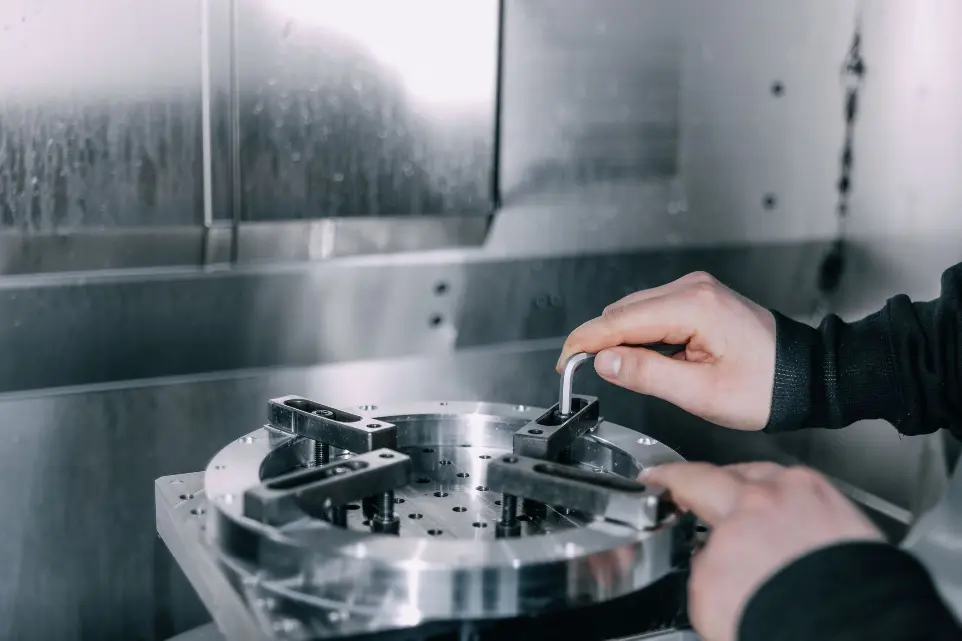
Safety rules cover the rigidity of the tooling, the workholding and control of the machining. The clamping must be secure and the support sufficient. Workholding is a key element of the whole process, because the rigidity of the setup depends on it. A CNC milling machine cannot make up for a weak clamping setup.
It should be taken into account that vibration of the workpiece degrades quality just as much as vibration of the tool.
Cooling and lubrication
Cooling plays an important role in tool life, and when CNC milling this steel it determines process stability. Two approaches are used, depending on the tool and the operation.
Dry machining
Dry milling with a strong air blast avoids thermal shock to the cutting edge. The coating withstands high temperatures, and coolant could damage it.
Liquid coolant
Liquid coolant effectively removes heat during drilling. High-pressure cooling improves chip evacuation.
High-pressure systems are effective in deep holes. Oil-based coolants reduce friction and cutting load.
Machining stability also depends on heat removal from the material. Proper cooling extends the life of cutting tools.
Drilling and turning hardened steel
Similar rules apply to other operations, and the rules for machining hardened steel are common to milling, drilling and turning. Carbide drills are effective in machining hardened steel.
Drilling
Cobalt drills are economical for steels of medium hardness. Peck drilling reduces the load on the tool.
Excessive temperature shortens tool life. Unsuitable drill geometry leads to chipping of the cutting edge.
What speed for turning steel?
In turning, the speed is selected according to the diameter, the hardness and the tool. Cutting speed is lower than for soft steel, and using an insert designed for hard steels is a prerequisite here.
The specific value is given by the insert manufacturer. Stability and short contact of the cutting edge also matter.
Common problems and how to fix them
Troubleshooting starts with observing the tool. Typical problems are rapid wear, edge chipping and vibration.
Tool overheating
This wear is usually caused by high temperature or the wrong tool material. A lower speed, a smaller depth of cut and a coating help.
Edge chipping
Chipping is caused by poor geometry, long overhang or too high a feed. Reduce the overhang and check the runout.
Poorer surface quality
Poorer surface quality is usually caused by vibration or a worn cutting edge. Replace the tool and reduce the depth of cut in finishing.
Applications of hardened steel
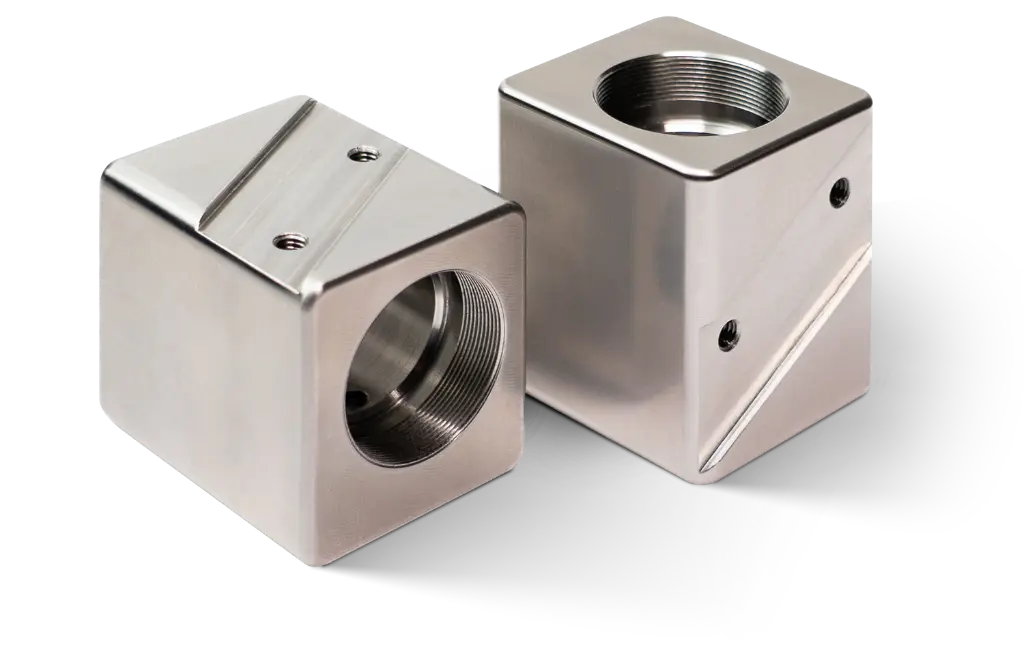
The applications of hardened steel are wide. Hardened steel is used in the production of gears and in mold making.
It is used in cutting tools. Gears require high hardness and accuracy.
Hardened gears are a good example of such a part. They require high accuracy and high material hardness.
In the aerospace industry, components of very high hardness are used. Such an application requires certainty about the material. Series production of such parts requires a stable process.
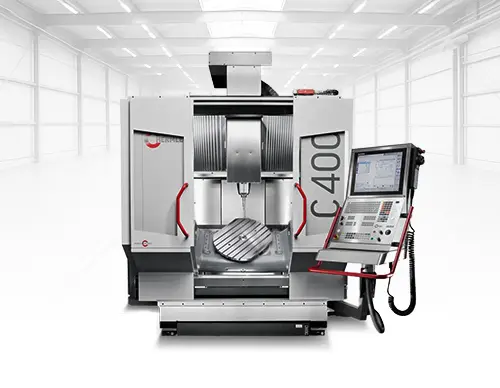
The applications of CNC milling include molds, gears and tools, and a further application is machine parts. At Sacher CNC we mill hard materials. See also: CNC milling and Heat treatment.
CNC milling of hardened steel – FAQ
Which end mills for hardened steel?
Preferably coated carbide tools with a reinforced cutting edge. Above 60 HRC, CBN is used.
What speed for turning steel?
It depends on the hardness, the diameter and the tool. For hardened steel it is lower than for soft steel, and the value is given by the manufacturer.
Which spindle for milling steel?
A rigid and stable one, with a speed range suited to the tool diameter.
What are the milling parameters ap and ae?
They are the depth and width of cut. For hardened steel, small values are chosen.