CNC grinding is a precision finishing process in which a computer-controlled grinding wheel removes a very thin layer of material and delivers dimensional accuracy and low surface roughness that turning or milling alone cannot provide. It is most often used after heat treatment, on shafts, bores and flat surfaces with narrow tolerances. Below we explain how the process works, what types of grinding there are, how to choose the wheel and when grinding pays off.
Table of contents
- What CNC grinding is
- How the grinding process works, step by step
- Types of grinding
- CNC grinding machines versus conventional machines
- Process parameters and surface quality
- Which materials can be ground
- Applications of CNC grinding
- When to grind and when turning or milling is enough
- CNC grinding services at Sacher
- CNC grinding - FAQ
What CNC grinding is
Grinding is a form of machining in which the tool is a grinding wheel, a disc made of thousands of tiny abrasive grains. Each grain removes a very thin layer of material, which is why grinding gives much better accuracy and a smoother surface than turning or milling. A part is usually ground after rough machining or after heat treatment, when the material is already hard.
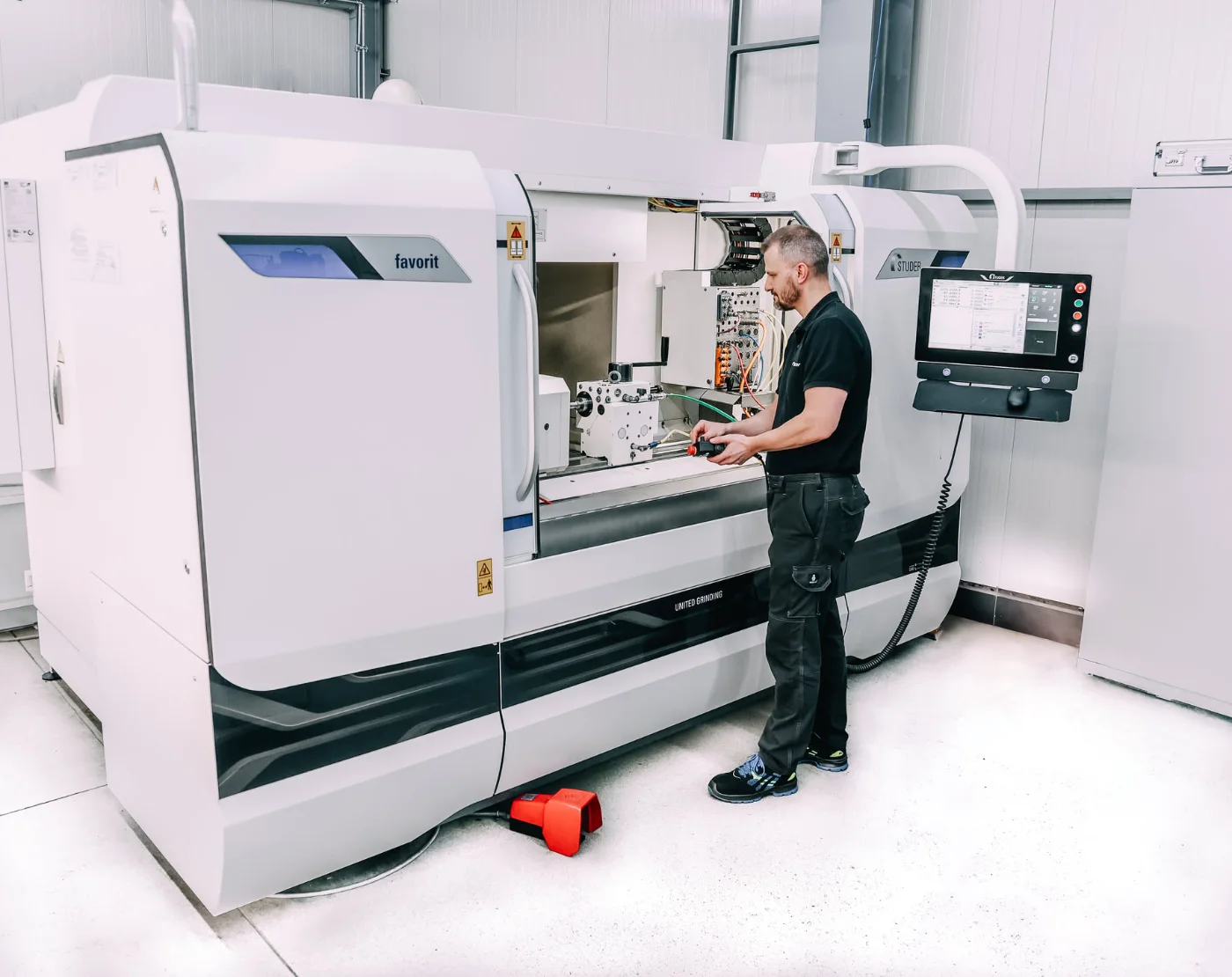
CNC stands for computer numerical control. CNC grinding machines are computer controlled: the program defines the movement of the wheel, the speed, the feed and the amount of material removed in each pass. As a result, the grinding process is repeatable, and successive parts have the same dimensions and the same surface roughness.
Precision grinding is used where narrow dimensional tolerances, low roughness and perfect geometry matter: on shaft journals, in bearing bores or on guiding surfaces.
How the grinding process works, step by step
The grinding process on a CNC grinding machine consists of several stages:
- Documentation and program. Based on the drawing, the technologist defines the dimensional tolerances, the required surface roughness and the sequence of passes, and then prepares the program.
- Choosing the right grinding wheel. The type of abrasive, the grain size and the hardness of the wheel are chosen to suit the material and the required surface quality.
- Clamping the workpiece. The part is held in a chuck, between centres or on a magnetic table, or guided without clamping, depending on the type of grinding.
- Dressing the wheel. Automatic dressing restores the sharpness and the correct profile of the wheel, which is extremely important for the repeatability of the process.
- Rough and finish grinding. First the wheel removes a larger allowance, and in the final passes with a small feed the required dimension and surface smoothness are achieved.
- Cooling. Coolant carries away heat and swarf and protects the part from overheating and surface damage.
- Quality control. Dimensions, roughness and geometry are measured with measuring instruments and compared with the drawing.
Once the process is set up, the machine produces successive parts without operator intervention, which ensures process stability and optimal results across the whole batch.
Types of grinding
The type of grinding depends on the shape of the part and how it is guided. In practice, the most common are:
| Type | What it involves | Typical example |
|---|---|---|
| Surface grinding | The wheel machines flat surfaces, the part lies on the table | Plates, guides, face surfaces |
| Cylindrical grinding between centres | The part is held between centres or in a chuck and rotates against the wheel | Grinding shafts, journals, outside diameters |
| Centreless grinding | The part rests on a blade and is guided between two wheels, without clamping | Large batches of shafts, pins and rollers |
| Internal grinding | The wheel works inside a bore | Bushings, bearing seats, bores after heat treatment |
| Profile grinding | A wheel with a suitable profile reproduces its shape on the part | Grooves, profiles, threads, tool outlines |
Grinding between centres and centreless grinding are used to machine round surfaces, and centreless grinding is especially suited to series production because it does not require clamping between centres. Surface grinding is used for flat surfaces, and internal grinding for accurate machining of inside diameters.
CNC grinding machines versus conventional machines
On conventional machines, the operator sets the feed by hand and checks the dimension, so the result depends on their experience. CNC grinding machines perform movements according to the program, measure the wheel and compensate for its wear, which ensures repeatability and high accuracy even with complex outlines.
| Criterion | Conventional machines | CNC grinding machines |
|---|---|---|
| Feed setting | Manual, depends on the operator | Programmed, repeatable |
| Repeatability in a batch | Variable | Very good |
| Complex outlines | Difficult to make | Possible thanks to numerical control |
| Wheel dressing | Manual | Automatic dressing |
| For single parts | Suitable for simple tasks | Pays off with demanding tolerances |
Conventional machines are still suitable for simple, one-off tasks. When repeatability, precision machining and quality requirements matter, CNC grinding machines are chosen.
Process parameters and surface quality
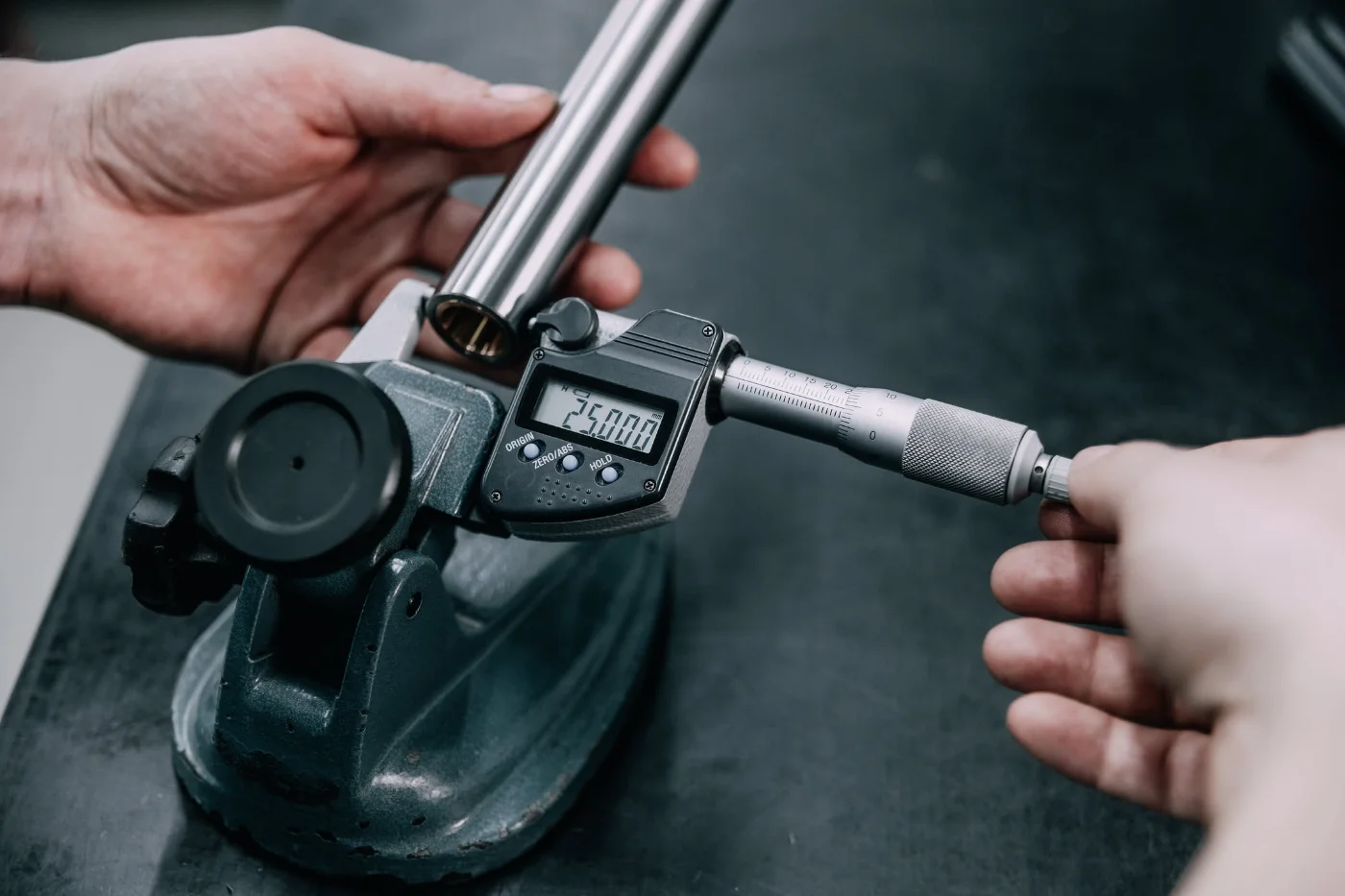
Surface quality after grinding is influenced above all by the choice of wheel and the machining parameters. A small grain and a lower feed give high surface quality, while a larger grain removes material faster.
| Factor | What happens when it is increased | What to watch out for |
|---|---|---|
| Wheel grain size | A larger grain removes more material in less time | Higher surface roughness |
| Workpiece speed and feed | Shorter grinding time | Risk of burning and worse surface smoothness |
| Depth of grinding | More material removed in one pass | Stress, distortion and worse accuracy |
Choosing the right grinding wheel is one of the key stages of preparing the process. The following are taken into account:
- Type of abrasive. Aluminium oxide is used for steel, and silicon carbide for brittle and non-ferrous materials. For tool and hardened steels, wheels made of superabrasive materials are also often chosen.
- Wheel hardness and bond. They affect the rate of wear and the self-sharpening of the wheel.
- Dressing. Regular dressing maintains the profile and sharpness of the wheel, and automatic dressing in CNC grinding machines ensures process stability.
- Cooling. The right amount of coolant prevents burning and dimensional errors.
- Required roughness and tolerances. The lower the roughness and the narrower the dimensional tolerances, the more finishing passes.
In grinding, preventive action is especially important: checking the condition of the wheel, balancing, constant coolant temperature and regular measurements. Thanks to them, the process stays stable, and errors are detected before a reject is made.
Which materials can be ground
Grinding is suitable for a wide range of different materials, especially hard ones that cannot be machined accurately with a turning tool or a milling cutter. The choice of wheel and cooling depends on the type of material.
| Material | Characteristics when grinding | Typical parts |
|---|---|---|
| Heat-treated steel | Hard, difficult to machine with a cutting tool, grinding removes distortion after hardening and restores the dimension | Shafts, crankshafts, camshafts, gears |
| Tool steels | High hardness and wear resistance, require suitable abrasives and cooling | Knives, punches, dies, punching tools |
| Stainless steel | Corrosion resistant, conducts heat poorly, requires wheel dressing and cooling | Parts for the food and medical industries |
| Structural and alloy steel | Good grindability | Mandrels, guides, bushings |
| Plastics and composites | Risk of deformation due to heat, require careful parameters | Insulating parts, guides |
With stainless steel and tool steels, the choice of wheel and constant cooling are especially important. The same drawing made from a different material may require different parameters and a different wheel.
Applications of CNC grinding
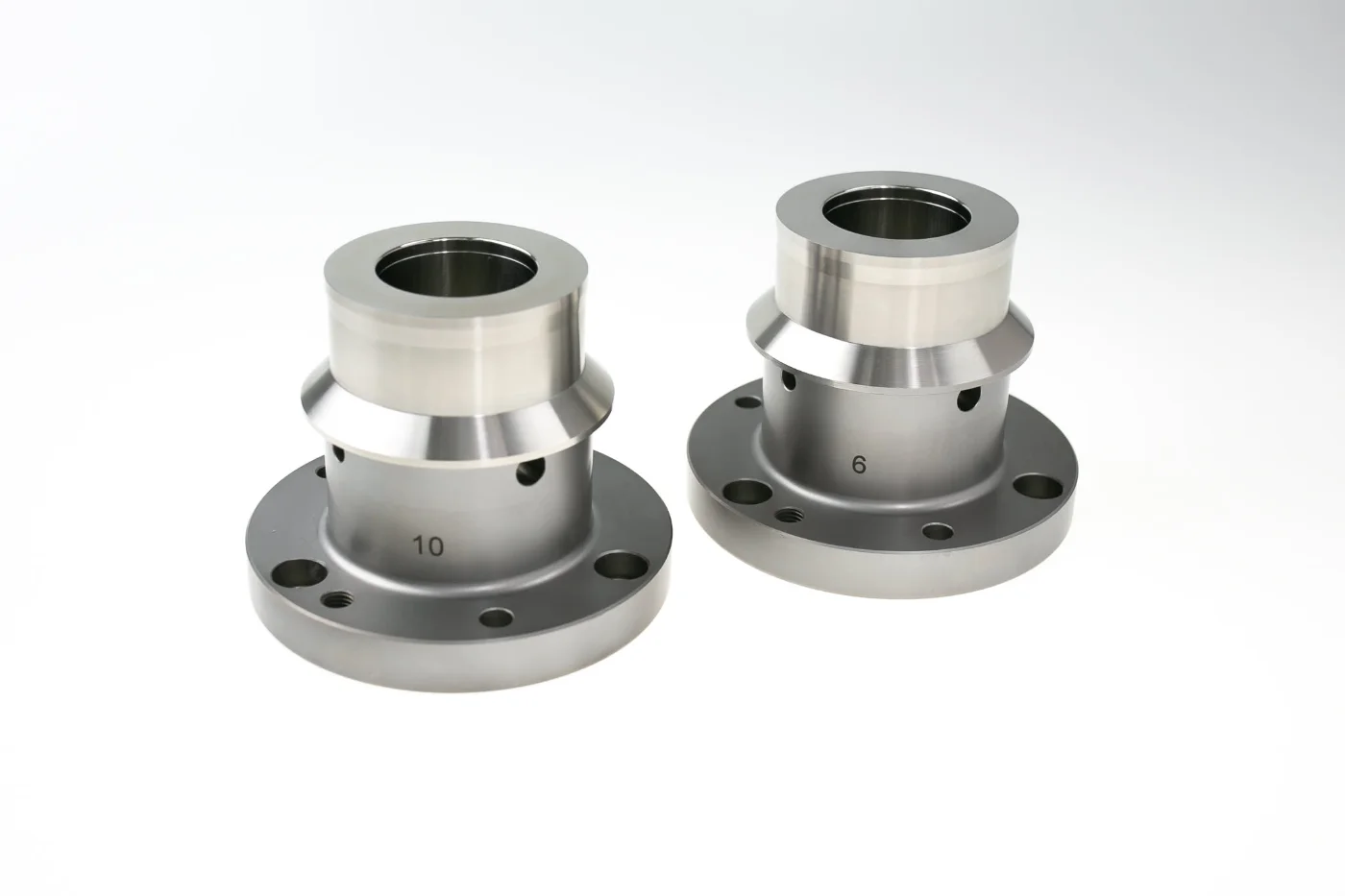
CNC grinding is used in many branches of industry wherever high accuracy and surface quality matter. It most often concerns:
- Automotive industry: camshafts, crankshafts, journals, valves and parts of drive systems.
- Machine building and automation: shafts, mandrels, guides and bearing surfaces with narrow tolerances.
- Gears and transmissions: grinding of tooth profiles and bores after heat treatment.
- Toolmaking: punches, dies, punching tools and knives, including parts made of tool steels.
- Aerospace and medical industries: precision parts with a high-grade surface and documented quality control.
- Hydraulics and pneumatics: piston rods, balls and bushings requiring a smooth surface.
Grinding is used both for single parts and in series production. Thanks to the repeatability of the process, it matters especially where components have to fit together perfectly.
When to grind and when turning or milling is enough
Grinding is worth choosing when the part has to meet requirements that machining with a turning tool or milling cutter alone cannot provide: very narrow dimensional tolerances, low roughness or a hard material after heat treatment. In other cases CNC turning or CNC millingis often enough, and they are faster and cheaper.
| Criterion | CNC turning and milling | CNC grinding |
|---|---|---|
| Role in the process | Shaping the part and removing larger allowances | Finishing, accurate dimensions |
| Typical accuracy | Hundredths of a millimetre | More accurate, with special requirements by an order of magnitude |
| Surface roughness | Medium | Low, a very smooth surface |
| Material after hardening | Difficult to machine with a cutting tool | A natural stage of machining |
| Cost and time | Lower | Higher, but justified by the requirements |
Most often the best solution is to combine technologies. The part is made on a lathe or milling machine with a small allowance, heat treated, and then ground to the final dimension. The choice of machining method is best made by a technologist based on the drawing.
CNC grinding services at Sacher
Sacher has been developing its competence in producing precision parts since 1989. Thanks to many years of experience, a modern machine park (28 machining centres) and a team of 52 specialists, we can offer CNC grinding services for metal parts. We make prototypes, single parts and small and medium batches, and we agree the scope and technical possibilities for a specific part after analysing the drawing.
Grinding is part of our comprehensive services in one place: turning, milling, EDM, our own heat treatment and quality control. As a result, a part can be made, hardened and ground without being sent between several plants, and one contractor is responsible for the result.
To prepare an individual quote, please send us:
- a technical drawing or 3D model,
- the material grade and information about heat treatment,
- the quantity and the expected deadline,
- dimensional tolerances and the required surface roughness,
- information on which surfaces are to be ground (outside diameters, bores, flat surfaces),
- additional requirements, e.g. measurement inspection.
CNC grinding - FAQ
How does grinding differ from turning and milling?
Turning and milling shape the part with a cutting tool or a cutter, while grinding removes a very thin layer of material with a wheel. As a result, it gives more accurate dimensions and lower surface roughness, and it also makes it possible to machine hardened materials.
What accuracy can be achieved?
It depends on the machine, the material and the shape of the part. CNC grinding can achieve dimensional accuracy better than turning, and very narrow tolerances for special requirements. We agree the specific values after analysing the drawing.
What surface roughness is possible?
Grinding gives a smooth surface with low roughness, much better than after turning and milling. The final result depends on the wheel, the parameters and the material.
Can stainless steel, tool steels and hardened materials be ground?
Yes, grinding is the natural process for this. However, each of these materials requires a properly chosen wheel and cooling.
When does CNC grinding pay off?
CNC grinding pays off when the part has narrow tolerances, high surface requirements or is hardened after heat treatment. With a larger quantity the cost of a single part falls, because the program and setup are prepared once.