
Steel processing covers all the processes that change the shape, dimensions or properties of a steel material so that it becomes a finished part with the required function. It includes machining, metal forming, heat and thermochemical treatment, as well as electrical discharge machining and surface finishing.
This article is for designers, process engineers and purchasing departments who order steel parts in series. We explain the types of steel processing, how they differ, how the steel grade affects the choice of method and in what order processes are combined to obtain a part that matches the drawing.
Table of contents:
- What is steel processing?
- Types of steel processing
- Steel machining
- Metal forming of steel
- Heat and thermochemical treatment of steel
- Electrical discharge machining of steel
- Surface finishing and protection
- Steel grade and processing
- How to choose the steel processing method?
- Steel processing at Sacher CNC
- Steel processing – FAQ
What is steel processing?
Steel is an alloy of iron with carbon and alloying elements. It is strong, readily available and widely used across industries: from mechanical engineering and automotive to tool making. However, a raw bar, sheet or forging is rarely ready to use without further processing.
Steel processing gives the material the desired shape and dimensions, the right surface quality and better mechanical properties, e.g. hardness, strength and wear resistance. A single part usually goes through several processes, which together form the manufacturing process.
The two largest groups are mechanical processing of metals and heat treatment of metals. Precise machining and properly selected heat treatment determine whether a high-quality part will last the required time in a machine.
Types of steel processing
The basic types of steel processing are:
- machining (mechanical processing) – removing material with a tool: turning, milling, drilling, grinding,
- metal forming – shaping metal by permanent deformation, without removing material: forging, rolling, stamping, bending,
- heat and thermochemical treatment – changing the structure and properties of steel by heating and cooling, sometimes combined with a change in the chemical composition of the surface layer,
- electrical discharge machining – removing material with electrical discharges, regardless of the hardness of the steel,
- chemical and surface treatment – e.g. black oxide, pickling or anti-corrosion coatings.
Each of these methods solves a different problem, which is why several of them are usually combined in part production.
Steel machining
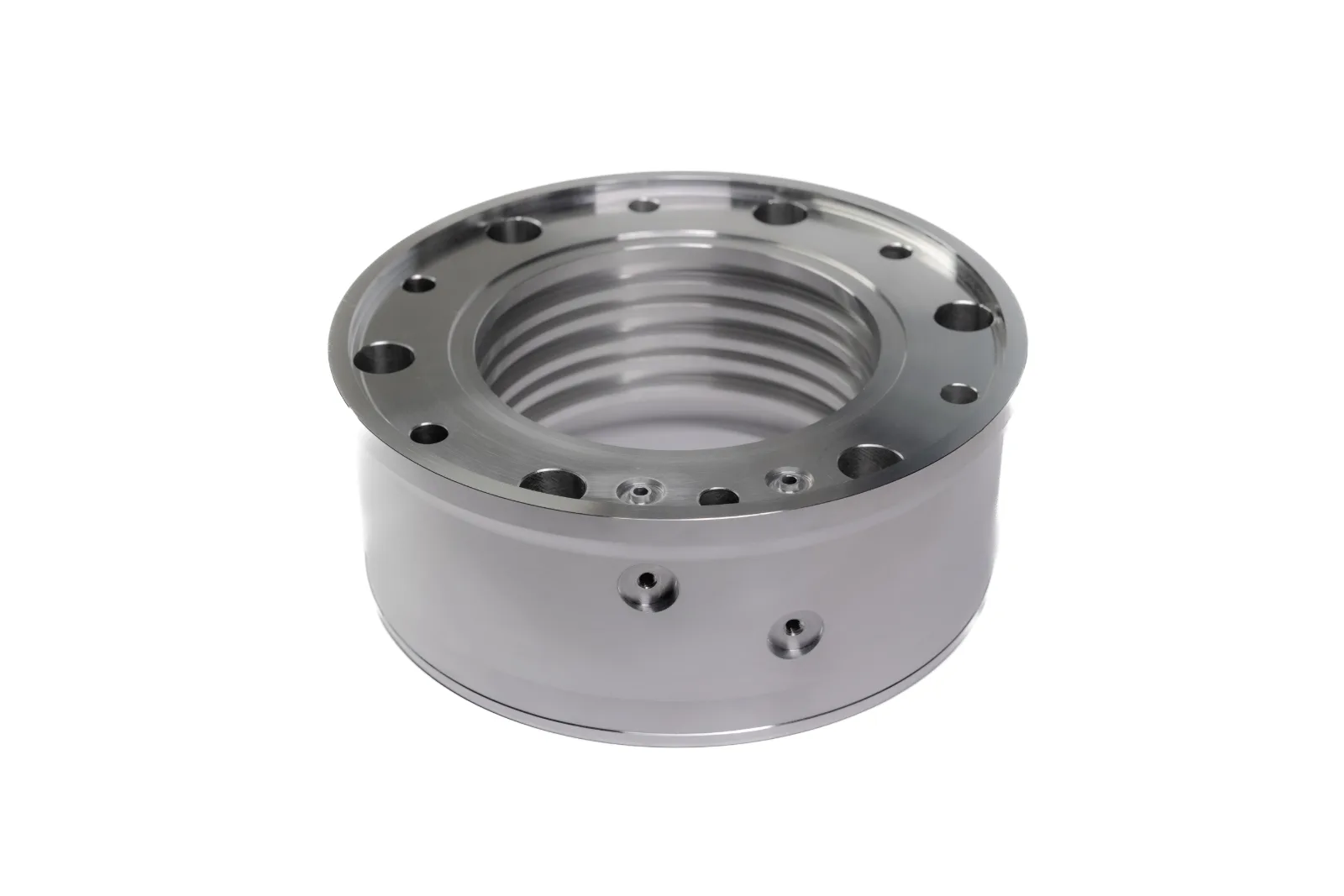
Machining removes excess material in the form of chips until the part reaches the required dimensions and shape. It is the most widely used method in the production of machine parts because it offers high precision and repeatability, also in large series.
The result depends on the cutting parameters: cutting speed, feed and depth of cut, as well as the tool and cooling. Steel is machined with hard tools – mostly cemented carbide, less often high-speed steel (HSS), and for hardened steel also ceramics or CBN. Today steel machining is mainly done on CNC machines, which makes it easier to hold tolerances across the whole series.
Machining also includes drilling, tapping and reaming. Holes are usually made in the same setup as turning or milling, which improves their position relative to other surfaces.
Turning
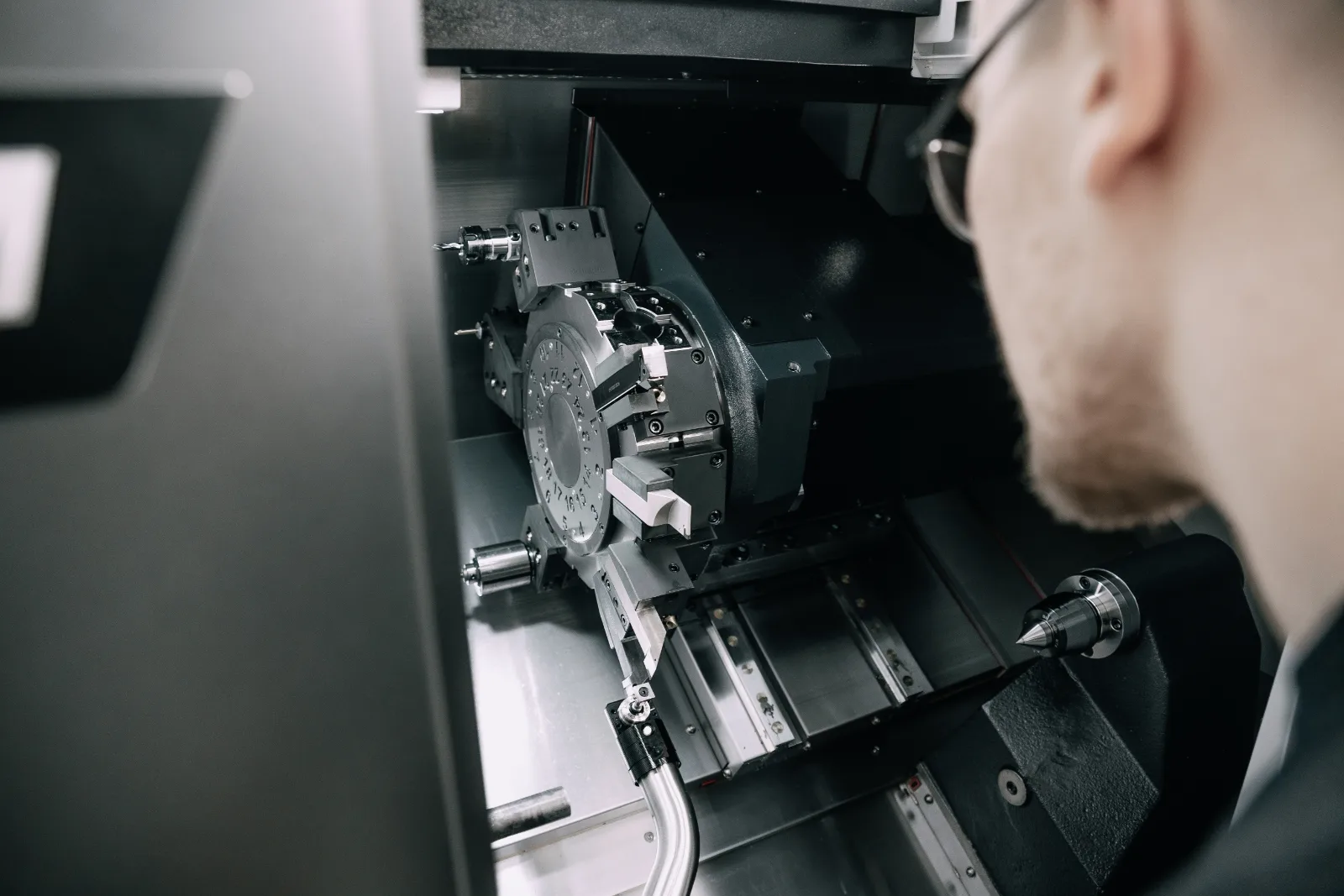
In turning, the workpiece rotates and the turning tool moves along or across its axis. This is how shafts, bushings, pins, flanges and other rotational parts are made. CNC lathes with driven tools can also produce cross holes and milled flats in a single setup. More on this topic: CNC turning.
Milling
In milling, the tool rotates and the material is stationary or moves relative to it. Milling is done on milling machines and CNC machining centres. It is used for housings, plates, pockets, slots and contoured surfaces. 5-axis machining centres can machine a complex part from several sides in one setup. More on this topic: CNC milling.
Grinding
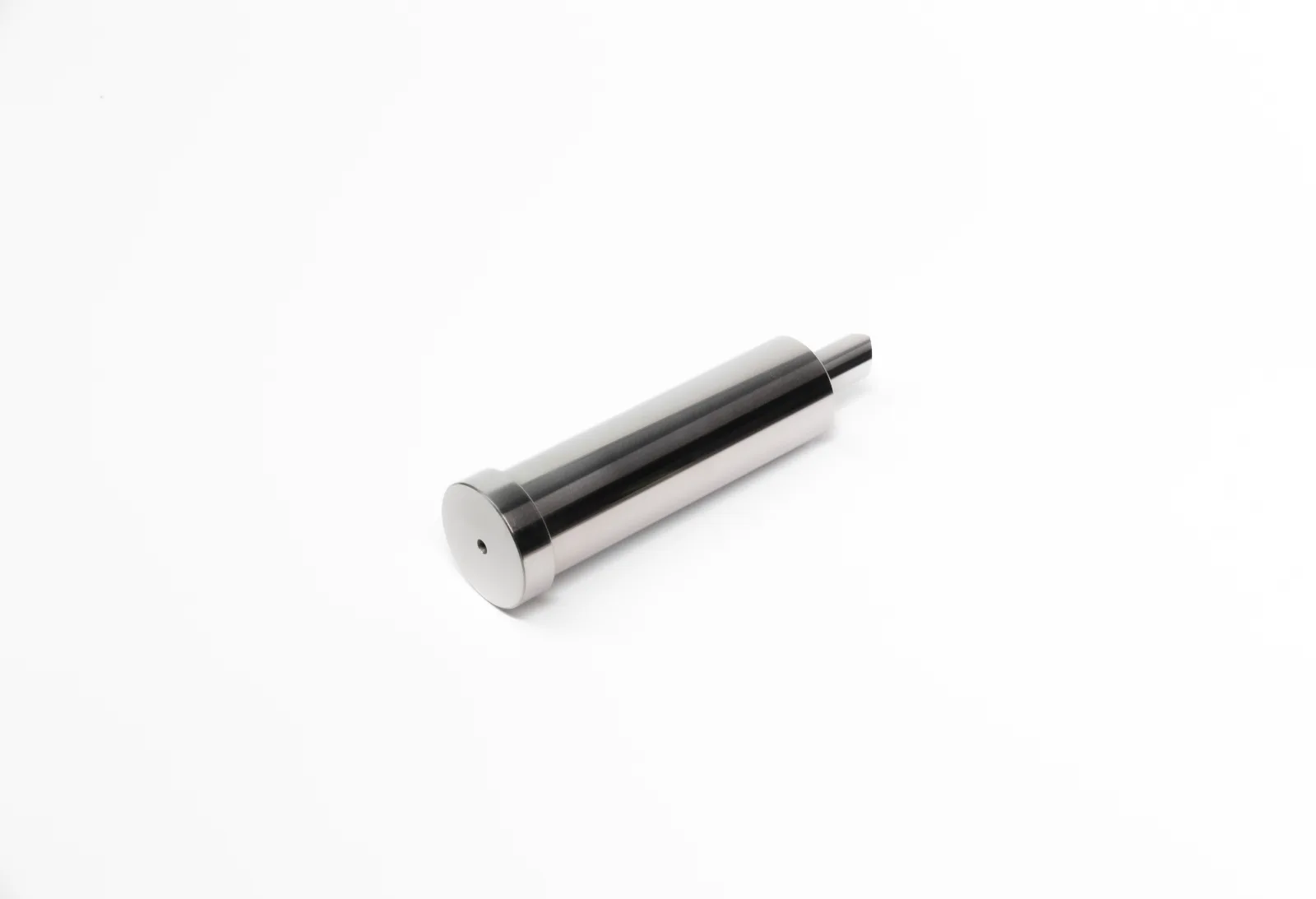
Grinding is an abrasive process: material is removed by the grains of the grinding wheel. It achieves the highest dimensional accuracy and a very smooth surface, which is why it is usually the last operation after hardening, e.g. on fitted surfaces, journals and guides. More on this topic: CNC grinding.
Metal forming of steel
Metal forming changes the shape of the material by permanent deformation, without chips, so with almost no material loss. The main processes are forging, rolling, stamping and bending, as well as shearing and blanking of sheet metal.
Steel forming is carried out hot or cold. Hot, at high temperature, steel deforms more easily – this is how forgings and wire rod are made. Cold forming gives better dimensional accuracy and a smoother surface, and the material is strengthened by work hardening.
Metal forming is well suited to very large series of thin sheet metal parts, e.g. brackets and housings. However, it requires tooling – dies, blanking dies and stamping tools – which are themselves made by machining and electrical discharge machining. More on this topic: Dies and stamping tools.
Heat and thermochemical treatment of steel
Heat treatment changes the structure of steel and thus its mechanical properties and, to some extent, its physical properties, without changing the shape of the part. It consists of heating the steel to a specific temperature, holding it there and cooling it in a controlled way. It is most often carried out after rough machining and before grinding.
Hardening and tempering
Steel hardening increases hardness and wear resistance. After hardening, however, steel is brittle, so it is always tempered – tempering reduces brittleness and stresses, and the tempering temperature sets the final hardness. Vacuum hardening limits surface oxidation and distortion of parts.
Annealing
Annealing softens steel, relieves stresses after welding or machining and homogenises the structure. It is used e.g. before machining or to stabilise the dimensions of high-precision parts.
Carburising and nitriding
Thermochemical treatment changes the chemical composition of the surface layer. Carburising enriches it with carbon and, after hardening, gives a hard surface and a tough core. Nitriding increases surface hardness and wear resistance and reduces friction; it also takes place at a lower temperature than hardening, so parts distort less.
Electrical discharge machining of steel
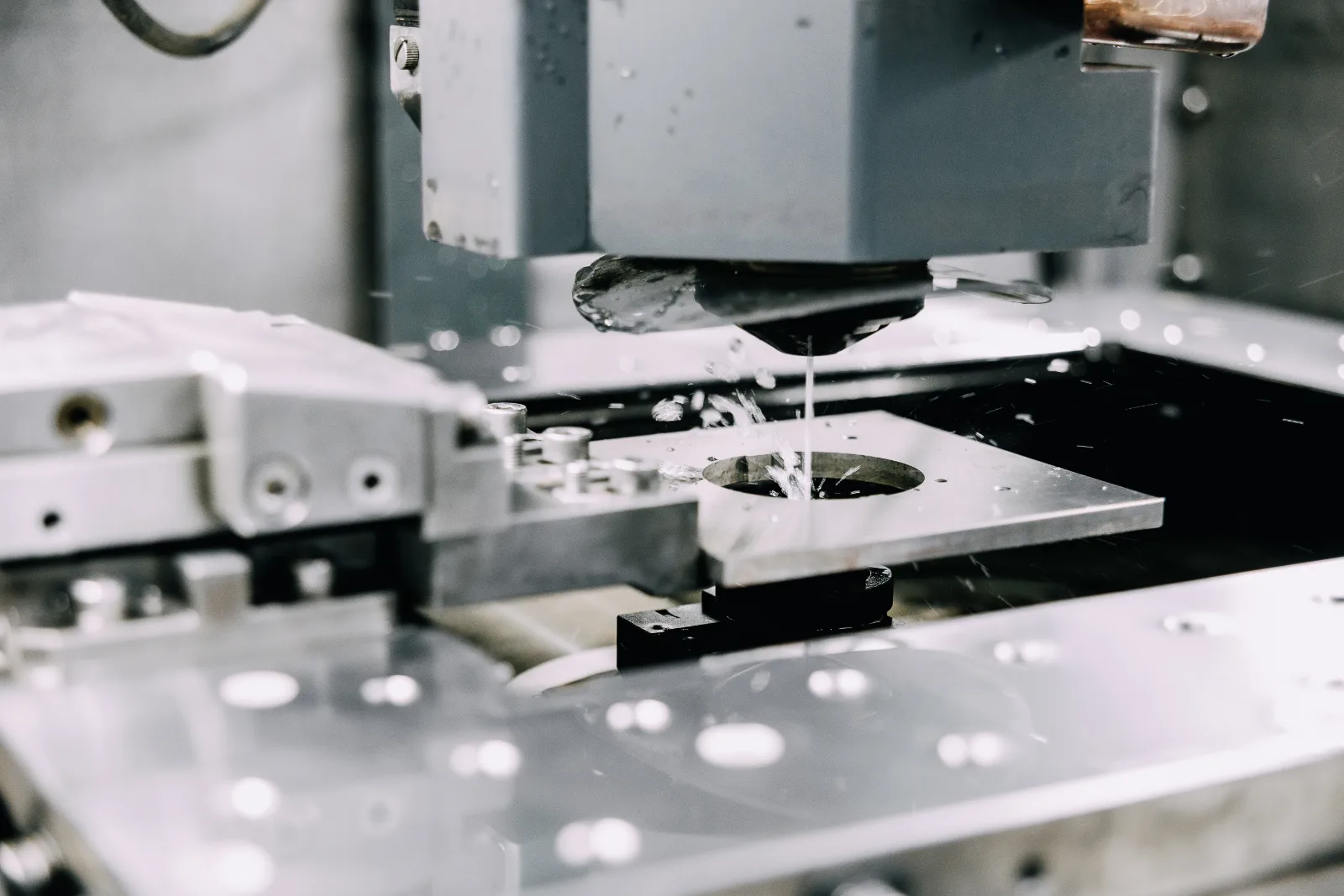
Electrical discharge machining (EDM) removes material through electrical discharges between an electrode and the workpiece. The hardness of the steel does not matter, so the method is well suited to hardened and tool steel. Wire EDM cuts precise contours, e.g. in punches and dies, while sinker EDM produces shaped cavities and sharp internal corners that cannot be made with a milling cutter. More on this topic: Electrical discharge machining.
Surface finishing and protection
Unprotected carbon and alloy steel corrodes. That is why parts often receive a coating or protective layer after machining and heat treatment. Popular options are black oxide, zinc plating, nickel plating and powder coating. Chemical treatment, e.g. pickling and passivation, prepares the surface or improves the corrosion resistance of stainless steel.
The choice of finish depends on the operating conditions of the part, the required resistance and the tolerances, because the coating thickness changes the dimensions.
Steel grade and processing
The properties of the material determine how easy it is to process:
- carbon structural steel (e.g. C45) – machines and hardens well, widely used in mechanical engineering,
- alloy steel for quenching and tempering (e.g. 42CrMo4) – has better mechanical properties after quenching and tempering, but requires higher cutting forces,
- tool steel – reaches high hardness after heat treatment, so some operations are done before hardening and finishing by grinding or EDM,
- stainless steel – conducts heat less well, and austenitic grades work-harden during cutting, so they need sharp tools, rigid clamping and good cooling.
Machining steel hardened above approx. 45 HRC requires special tools and rigid machines. We write about this in the article Milling and machining hardened steel with CNC.
How to choose the steel processing method?
The method is chosen according to the shape of the part, the required precision, the steel grade, the batch size and the technical requirements of the drawing. A typical manufacturing process for a steel part looks like this:
- cutting material to length or profile cutting from plate,
- rough machining with an allowance for further operations,
- heat treatment, e.g. hardening and tempering or nitriding,
- finishing: grinding, hard milling or EDM,
- surface finishing and dimensional inspection.
The biggest savings are made at the planning stage. The process route, i.e. the order of operations, clamping and the choice of allowances, affects the cost and repeatability of the whole series.
Steel processing at Sacher CNC
At Sacher CNC we make parts from structural, alloy, tool and stainless steel – from single parts to medium and large series. We make parts for companies in various industries: mechanical engineering, automation, automotive and tool making.
In one plant we combine turning, milling, surface and cylindrical grinding and electrical discharge machining. We have our own hardening shop: we vacuum harden with oil quenching, temper, anneal and plasma nitride. This means we offer a wide range of steel processing in one place. We arrange protective coatings within the same order, so the customer receives a finished part. We work under an ISO 9001 quality management system.
Steel processing – FAQ
What are the three metalworking techniques?
The most commonly listed are machining, metal forming and heat treatment. In addition there are electrical discharge machining, thermochemical treatment and chemical treatment.
What speed should steel be turned at?
The spindle speed results from the cutting speed and the diameter: n = 1000 × vc / (π × D), where vc is the cutting speed in m/min and D is the diameter in mm. The cutting speed is selected for the steel grade and tool according to the insert manufacturer's catalogue. For example, vc = 200 m/min and a diameter of 50 mm give approx. 1270 rpm.